
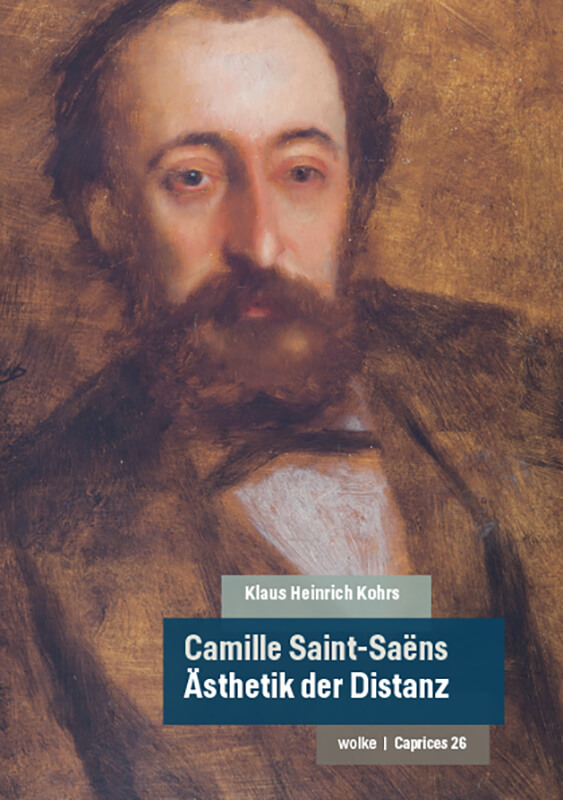
Caprices 26
Klaus Heinrich Kohrs

Camille Saint-Saëns

Ästhetik der Distanz

"We had different ideals: he sought above all the passions and life, whereas I pursued the chimera of purity of style and perfection of form," Saint-Saëns wrote in 1885 in a memoir about his friend Georges Bizet, who had died a decade earlier. But how could Saint-Saëns' ideal be realized in a field in which passions and emotions play the leading role: opera? How could he assert himself with such a postulate alongside a thoroughly admired Carmen and Jules Massenet, seven years his junior, who had really taken off with his Roi de Lahore at the new Opéra Garnier in 1877, followed by the Hérodiade in Brussels in 1881? In Saint-Saëns' review of the Brussels premiere, one could read of a distanced admiration for music "so fundamentally seductive", "of the scent of the rose, the voice of the nightingale and the flapping of the butterfly's wings". That was Massenet's domain.

In addition to Massenet's ingratiating art of persuasion, however, there was an even greater challenge on the way to his own conception: the authorial art of persuasion of that unsympathetic but powerful figure whom Berlioz had reluctantly shaken off, but who could now no longer be ignored - Richard Wagner. Saint-Saëns had received him incomparably more closely than any of his compatriots. Was the classical French tradition, on the other hand, pale and anemic, which referred to Gluck and seemed to end with Berlioz's Les Troyens? This is where Saint-Saëns was able to make his mark with his own unique perspicacity, with his own unique "énergie intellectuelle", as the critic Edmond Hippeau put it in 1883.

contents

Print: 62 pp., pb., € 9,50, 978-3-95593-326-5
Language: German

Weight: 0.17 kg

9,50 

incl. VAT, plus shipping costs if applicable

Enter your search here

When searching for ISBNs, please omit the hyphens!