
Caprices 20
Wolfgang Molkow

Glaube, Liebe, Hoffnung

Franz Kafka, Ödön von Horváth und Oscar Wilde

A writer who considers himself to be decidedly unmusical opens up new and peculiar perspectives on music for his readers. This is the case of Franz Kafka, an author who is not really associated with musical events. And yet it is precisely his supposed lack of musicality that prompts the highly cultivated and oversensitive poet to make strange, bizarre, sensitive and fantastic observations about people playing the trumpet and violin and about singing dogs and mice.

No less curious, albeit in a different way, is the musical background that resonates in Ödön von Horváth's dramas and folk plays. Horváth's Austro-Hungarian origins reveal similarities to Kafka's Czech-German cultural sphere, which is also evident in the dubious role that music plays as a vehicle for sinister and macabre emotions.

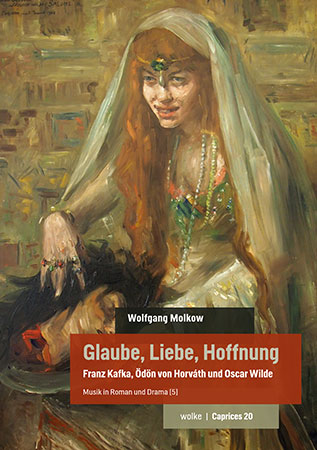
The aphorisms that the Irish poet Oscar Wilde interspersed in his comedies and stories about music and musicians are drenched in irony. But Wilde also knew the rapturous and romantic side of musical art, as his novel The Picture of Dorian Gray reveals. As far as the musical settings of his works are concerned, the tragedy Salome will probably only achieve world fame as an opera one-act by Richard Strauss. His fairy tales and hedonistic Renaissance dramas also inspired the Viennese composers Alexander von Zemlinsky and Franz Schreker to create opulent operas and ballets.

contents

E-Book: 50 pp., pb., € 9,00, 978-3-95593-320-3
Language: German

Weight: 0.16 kg

9,00 

incl. VAT, plus shipping costs if applicable

Enter your search here

When searching for ISBNs, please omit the hyphens!