
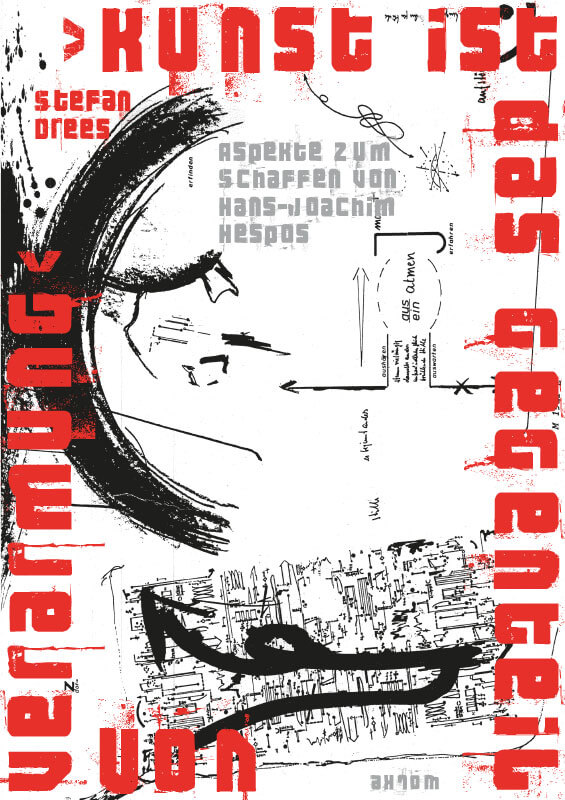
Stefan Drees

»kunst ist das gegenteil von verarmung«

Aspekte zum Schaffen von Hans-Joachim Hespos

For more than five decades, Hans-Joachim Hespos (*1938) has aimed to enrich music through the deliberate use of strategies of overload in his artistic work. The main objective of this study is to explore such strategies with regard to the tonal and visual appearance of the works in performance. The starting point is an examination of the peculiarities of notation, whose claim to individuality not only forms the basis of Hespos' aesthetic concept, but also demands a performance practice that aims at constant self-questioning on the part of the performers. Notation and form prove to be the results of a compositional process aimed at maximum contrast, the peculiarities of which are described here for the first time, taking into account selected sketches and notes by the composer. The study shows the extent to which Hespos, through the nature of his scores, undermines the precise predictability of the performance, i.e., from the outset, he relies on elements that render the act of reproduction vague and thus ultimately influence the process of reception by the audience. One of the fundamental elements here is the theatricality demanded of the performers to varying degrees, which proves to be a central mode of Hesp's composing in general.

contents

free shipping within Germany

Print: 248 pp., pb., ill., €28.00, 978-3-95593-084-4
Language: German

Weight: 0.49 kg

28,00 

incl. VAT, plus shipping costs if applicable

Enter your search here

When searching for ISBNs, please omit the hyphens!